 It is always amazing to see the stars in a dark night with an open sky. The beauty of universe delights the pupil of the eye, and it shows the countless questions of this perfect creation. A same universe happens to be in your brain, full of starts that illuminate when an interconnection happen. These stars call neurons are specialized on carrying information through an electrochemical process. The human brain has approximately 100 billion neurons. There are three types of neurons: 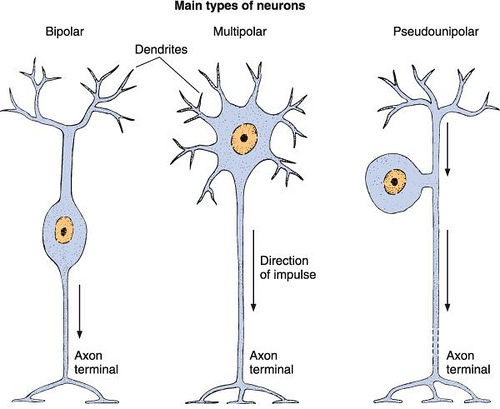 There are three basic parts of a neuron:
-dendrites -cell body - axon Although, all neurons vary somewhat in size, shape, and characteristics depending on the function and role of the neuron. Some neurons have few dendritic branches, while others are highly branched in order to receive a great deal of information. Some neurons have short axons, while others can be quite long. The longest axon in the human body extends from the bottom of the spine to the big toe and averages a length of approximately three feet. The functional classification of the neurons is based on the direction that neurons conduct impulses. Sensory or afferent neurons conduct impulses from sensory receptors into the nervous system. Motor or efferent neurons conduct impulses out of the nervous system to different organ such as muscles, glands, etc. There are two types of motor neurons: Somatic and Autonomic.
0 Comments
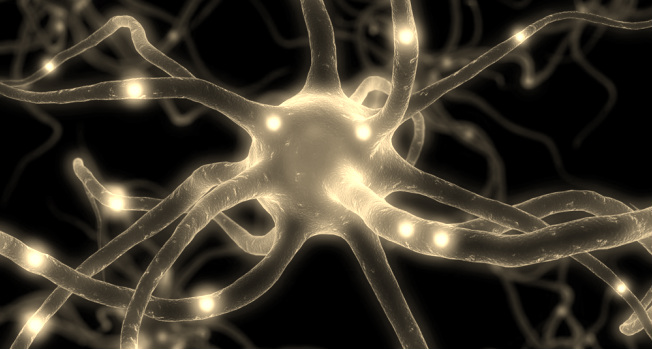 Neuroscience is the study of how the nervous system behaves and how it develops. Neuroscientists focus on the brain studying the structure and function of the brain and nervous system. Most professionals specialize in a certain area of study, such as cell chemistry and biology, brain anatomy, cognition, genetics, or experimental psychology liaising closely with other disciplines, such as mathematics, linguistics, engineering, computer science, philosophy, psychology, and medicine. Not only is neuroscience concerned with the normal functioning of the nervous system, but also what happens to the nervous system when people have neurological, psychiatric and neurodevelopmental disorders. Neuroscientists are involved in a much wider scope of fields today than before. They study the cellular, functional, evolutionary, computational, molecular, cellular and medical aspects of the nervous system. Neuroscience offers many job opportunities for highly well trained candidates with the goal of research. Here are some of the branches in Neuroscience: I. Affective neuroscience II. Behavioral neuroscience III. Cellular neuroscience IV. Clinical neuroscience V. Cognitive neuroscience VI. Computational neuroscience VII. Cultural neuroscience VIII. Developmental neuroscience IX. Molecular neuroscience X. Neuroengineering XI. Neuroimaging XII. Neuroinformatics XIII. Neurolinguistics XIV. Neurophysiology XV. Paleoneurology XVI. Social neuroscience XVII. Systems neuroscience |
Categories
All
Archives
October 2025
|
 RSS Feed